The Legend of Seth Lover and the P.A.F. Humbucker
The Sound of Rock History
The sound of a Les Paul guitar, plugged into a saturated tube amp, is a true rock staple. Its warm, thick growl can be heard filling stadiums worldwide. But what makes this sound so unique?
It's all thanks to the P.A.F. Humbucker, invented by Gibson engineer Seth Lover in the 1950s. The Humbucker revolutionized guitar the sound of electric guitar, and to this day, it remains one of the most sought-after pieces of music gear.
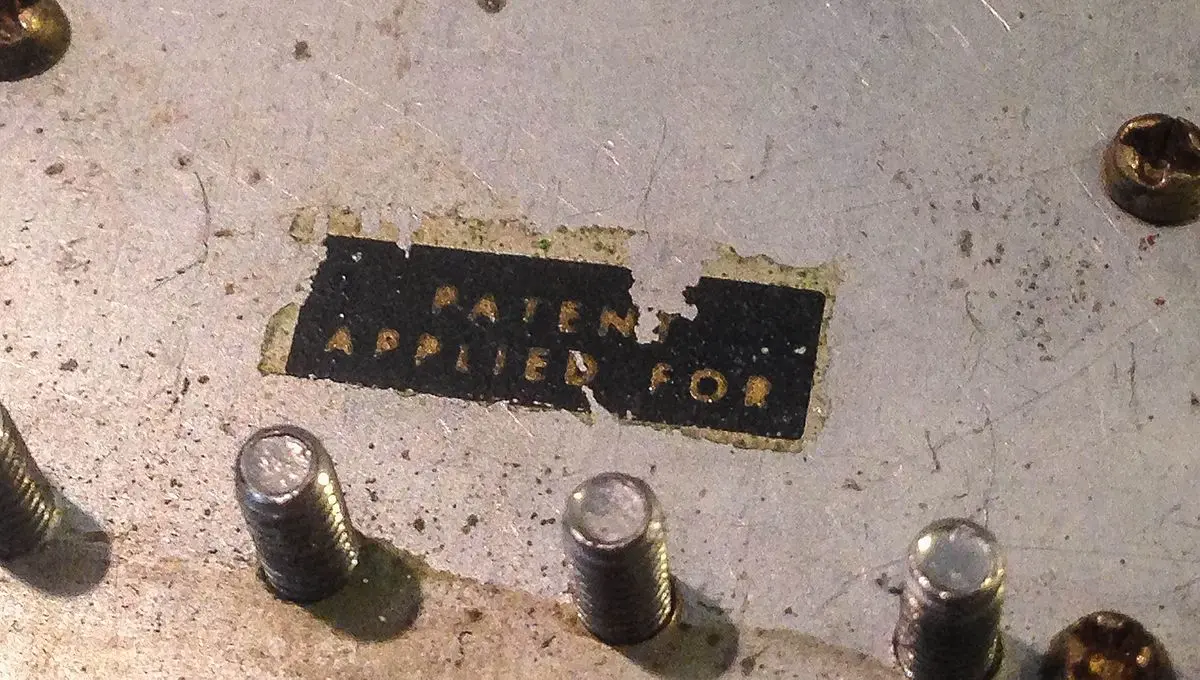
Gibson filed their patent for their invention in 1955, and soon thereafter, production began. The first Humbuckers were called P.A.F. Humbuckers because of the "Patent Applied For" sticker on their baseplate. The original P.A.F. humbucker pickups debuted in 1957 on the Gibson Les Paul Gold Top and Les Paul Custom.
The P.A.F. sound became synonymous with the Golden Era of Rock n Roll and captured the imagination of guitar icons like B.B. King, Eric Clapton, and Keith Richards. Original vintage P.A.F. pickups were produced from 1955 to 1960.
Their scarcity and the influence they had on the music of these guitar legends, makes them highly sought after collectible pieces of rock history. The hype around P.A.F. pickups has driven their price up to several thousand dollars
What is a Humbucker and how is it assembled?
Single coil guitars struggled to produce enough output to meet the demand for louder guitars in the rock and roll era of the 1950s. Seth Lover found a solution to this problem by creating the Humbucker pickup design.
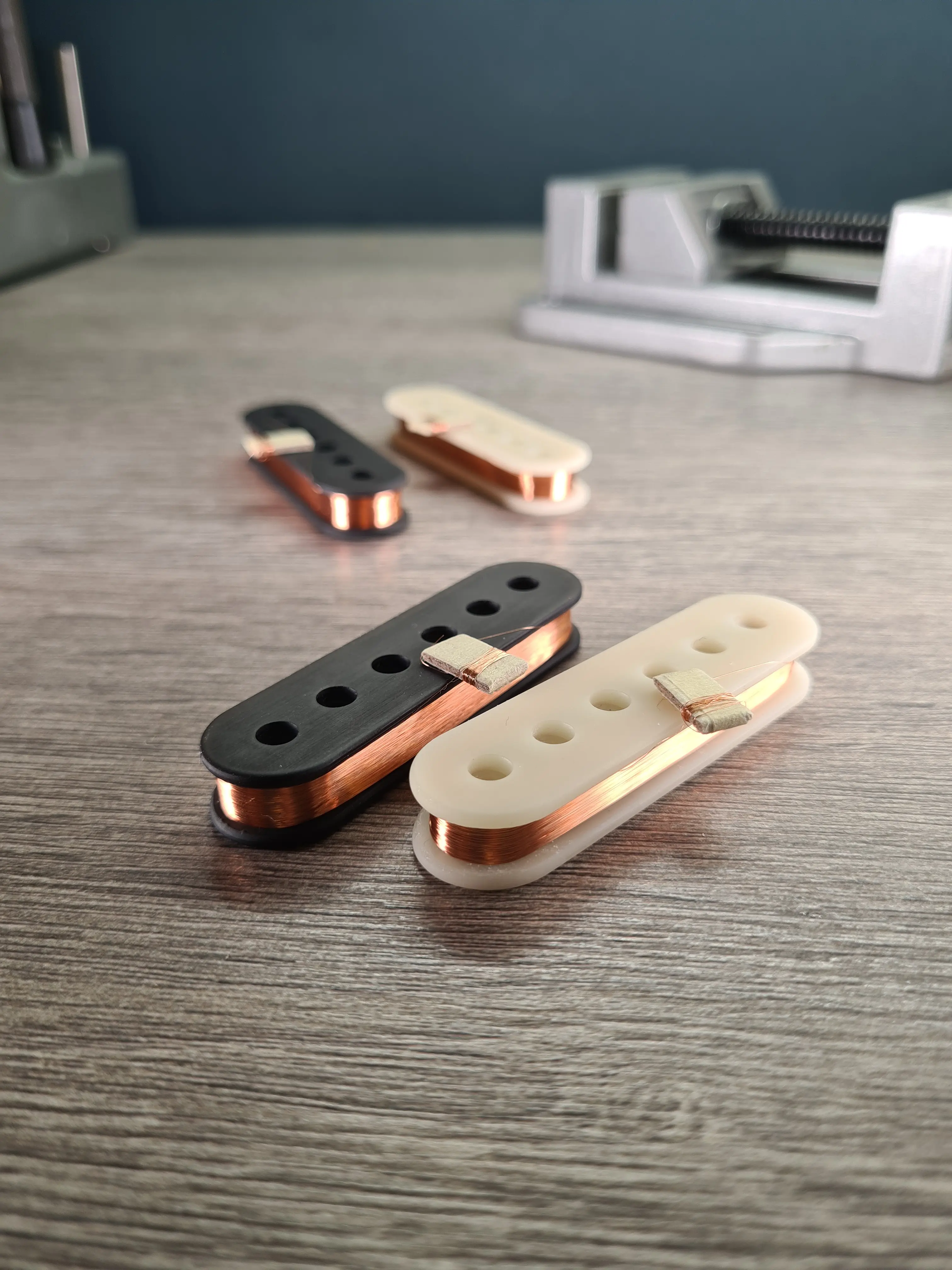
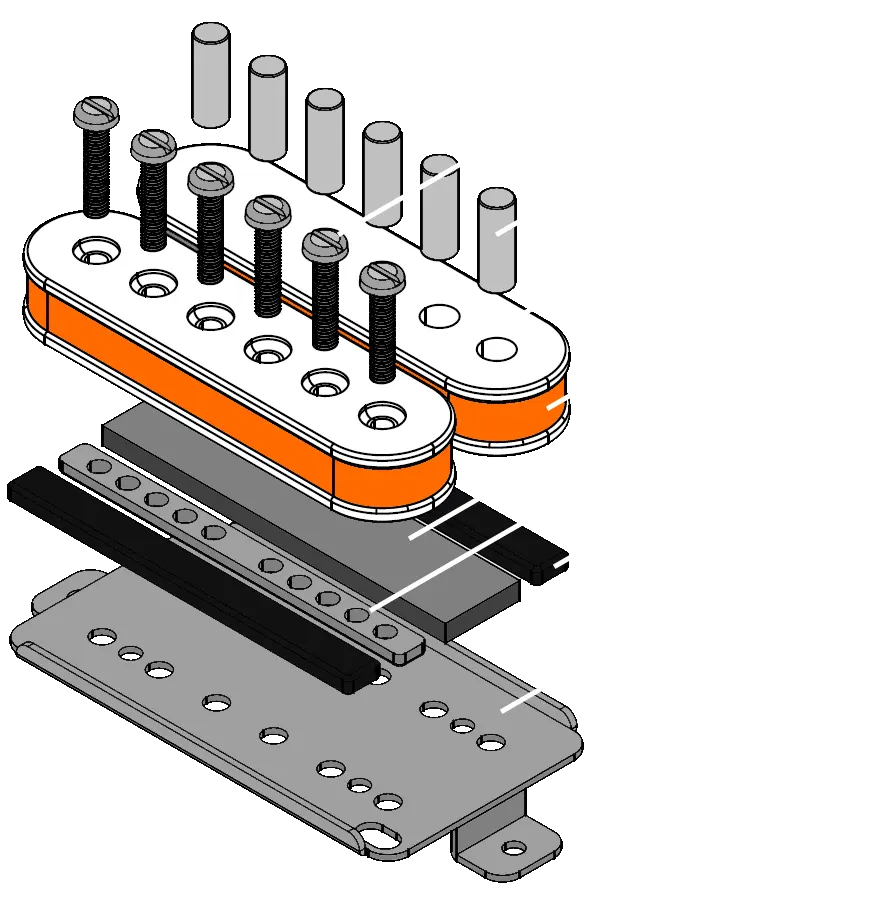
A Humbucker consists of two coils of magnet wire with the same geometry and windings. They are connected in series with reverse polarity and switched phases.The two coils are positioned side by side, with one side using steel screws as pole pieces and the other using steel slugs.
Beneath the coils is a bar magnet that magnetizes the pole pieces of both coils, with one side north and the other side south. The pole pieces are used to bend the magnetic field in the direction of the strings.
All these parts are then mounted to a baseplate with spacers beneath the coils to keep everything level and a metal spacer between the screw pole pieces to help better magnetize them.
How does a Humbucker work?
Humbucker pickups use two closely matched coils to eliminate unwanted electromagnetic interference, such as 60-cycle hum commonly found in single-coil pickups. These coils are wired in series, allowing their signals to combine and produce a louder output.
The key to removing electromagnetic interference lies in the principle of phase cancellation. In humbuckers, the electrical phases of the two coils are inverted relative to each other. This means that while one coil produces a peak in its electrical signal, the other produces a valley. When these opposite phases combine, they cancel each other out, effectively reducing or eliminating interference.
Noise Signal
Coil A: positive phase
Coil B: negative phase
Coil A+B: combined signal
However, simply inverting the electrical phase would also cancel out the musical tones produced by the guitar strings. To preserve the guitar’s tone while still canceling the hum, humbucker designers employ a clever solution: reversing the magnetic polarity of one coil. This adjustment ensures that the musical signals from the strings remain in phase and additive, leading to a full, rich tone.
String Signal
Coil A: positive phase
Coil B: negative phase
Coil A+B: combined signal
Importantly, the reversal of magnetic polarity in one coil does not affect the phase cancellation of the interference. The noise signals, which are still out of phase due to the electrical inversion, continue to cancel each other out, thereby maintaining the humbucker’s effectiveness in reducing unwanted noise.
Where does „the P.A.F sound“ come from?
There is a whole list of things that are important to capture the Sound of a P.A.F. Humbucker. First off the materials, In the Chart below you can take a close look at the specs of a vintage P.A.F. Pickup
| Screws: | Philister Head, Nickel plated Steel |
| Slugs: | Nickel plated Steel |
| Wire: | 42 AWG Plain Enamel Wire |
| Bobbins: | Butyrate |
| Cover: | Nickel-Silver |
| Magnet: | AlNiCo 2 Bar Magnet |
| Screw Spacer: | Steel |
| Bobbin Spacers: | Maple |
| Baseplate: | Nickel-Silver |
Another integral factor for the P.A.F. sound are the machines they were wound on. Some of them did not have an auto-stop mechanism, which means the workers had to stop the machine manually when they felt that there was enough wire on the coil.
Together with the starter wire that was used, this leads to slightly asymmetric Coils, which means they dont have the same number of winds.As a result,both coils produce a slightly different signal, so that they dont work 100% noise cancelling when they are paired.
This emphasizes the upper frequency band and broadens the dynamic Range. Furthermore, P.A.F. Humbuckers were not wax potted, which further amplifies the open character and gives the pickup a percussive quality.
The inconsistencies in the early production process gave each Pickup it‘s own character. If you compare two P.A.F.s, even from the same production year, you will find that they will sound different and have variyng .
With further standartizing the production, Gibson was able to achive a more consitent Product, however the Later Models with a Patent Number could never build the same myth around them as their iconic Predecessors.